Slope and wall engineering in Nelson addresses the critical interface between natural terrain and built infrastructure, encompassing the analysis, design, and remediation of both natural slopes and constructed retaining structures. This category covers everything from assessing landslide risk on steep residential sections to designing robust retaining walls for commercial developments. In a region characterised by dramatic topography, where hillside living is commonplace and coastal erosion shapes boundaries, geotechnical stability is not just a technical requirement but a fundamental public safety and asset protection concern. Effective slope and wall solutions prevent property damage, maintain access routes, and safeguard lives against the forces of gravity and weather.
Nelson's unique geological setting presents distinct challenges that demand specialised local expertise. Much of the city and its surrounds are underlain by the Moutere Gravels, weakly cemented Pleistocene conglomerates that are prone to erosion and gullying when vegetation is removed or during intense rainfall. These materials can stand in near-vertical cuts when dry but lose strength rapidly when saturated. Additionally, the Richmond Range and Port Hills feature zones of complex, tectonically sheared bedrock from the Dun Mountain-Maitai Terrane, including ultramafic rocks and serpentinite, which weather to weak, clay-rich soils with low shear strength. The 2011 and 2013 Nelson floods, along with ex-Tropical Cyclone Gita in 2018, highlighted widespread slope instability in these formations, triggering countless slips and debris flows that severed roads and damaged homes, underscoring the necessity of rigorous slope stability analysis.
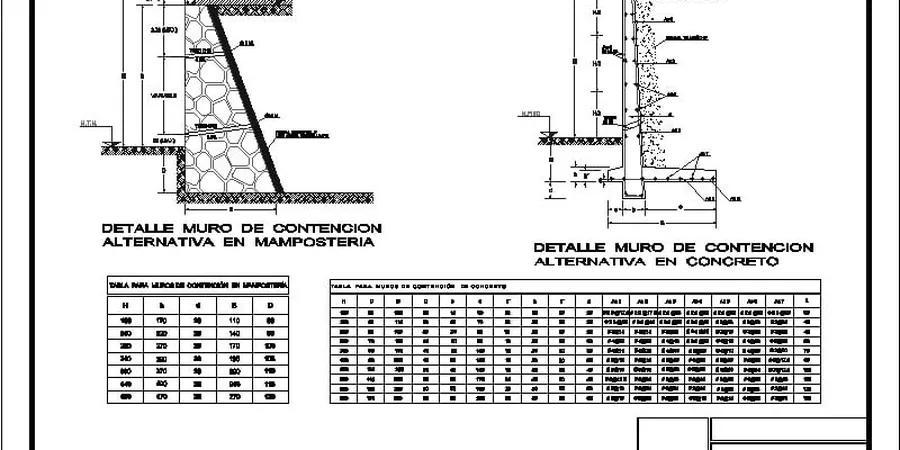
Regulatory compliance in New Zealand is governed by a framework of national standards and local council requirements. The Building Act 2004 requires that all building work, including retaining walls over 1.5 metres in height or those supporting a building or driveway, obtain a building consent. Design must align with the New Zealand Building Code, specifically Clause B1 (Structure), with acceptable solutions and verification methods provided by AS/NZS 1170 for structural actions and NZS 3604 for timber-framed walls. Crucially, the geotechnical design itself follows the guidelines of the New Zealand Geotechnical Society's Module 6 for retaining walls and Module 5 for slope stability, which mandate a limit state design philosophy considering both ultimate and serviceability conditions. The Nelson City Council's District Plan may also impose resource consent requirements for earthworks exceeding certain volumes or cut heights, particularly in identified Land Instability Overlays, making early geotechnical input essential for project feasibility.
This category serves a wide spectrum of projects, from private residential builds to large-scale public infrastructure. Homeowners carving out building platforms on the Port Hills or in Atawhai often require retaining wall design for timber pole, concrete cantilever, or masonry block walls to create usable terraces. Larger commercial and subdivision developments in areas like Stoke or Richmond frequently need engineered solutions for reinforced soil slopes or anchored shotcrete walls to maximise land use on challenging terrain. Roading authorities, including Waka Kotahi NZ Transport Agency and the Nelson City Council, routinely engage consultants for rockfall hazard assessments and the design of active active/passive anchor design systems to stabilise cut slopes along critical transport corridors such as Rocks Road and the Whangamoa Saddle, where failure would isolate communities.
FAQ
What is the difference between a slope stability issue and a retaining wall issue?
A slope stability issue concerns the natural or cut ground's potential to fail under its own weight, often triggered by rainfall or undercutting, and is addressed through analysis of the soil mass's shear strength. A retaining wall issue, conversely, involves designing an engineered structure to provide lateral support to a soil face, preventing a wedge of soil from sliding or overturning the wall. While a wall stabilises a localised cut, global slope stability analysis checks for deeper-seated failures that could bypass the wall entirely.
When do I need a building consent for a retaining wall in Nelson?
Under the New Zealand Building Act, a building consent is required for any retaining wall exceeding 1.5 metres in height, or any wall of any height that supports a building, driveway, or surcharge load. The Nelson City Council applies these national thresholds. Even if a wall is under 1.5 metres, if it is part of a larger earthworks scheme that requires resource consent due to volume or proximity to a boundary, detailed engineering design and approval will still be necessary to demonstrate stability and drainage adequacy.
What are the most common causes of slope failure in the Nelson region?
The predominant cause is rainfall infiltration into the region's weakly cemented Moutere Gravels and weathered bedrock, which reduces soil suction and shear strength. Poor surface water management, leaking services, and vegetation removal on steep slopes exacerbate this. Undercutting by stream erosion and, in coastal areas like Tahunanui, wave action at the toe of slopes are significant triggers. Seismic shaking from an Alpine Fault or local crustal fault event also poses a long-term, high-consequence initiation risk for deep-seated landslides.
What is the role of anchors in stabilising slopes and walls?
Ground anchors are high-capacity tensioned tendons grouted into the ground to transfer load from a retaining structure or unstable slope surface to a deeper, competent stratum. In slope stabilisation, passive anchors or soil nails reinforce the soil mass internally without active stressing, increasing shear resistance. Active anchors, conversely, are stressed against a wall or beam to apply a pre-determined clamping force, actively resisting soil pressure. They are critical for securing large cut slopes and tall concrete walls where space is constrained and passive resistance is insufficient.