The excavator bucket curls through a weathered colluvium that shifts from gravelly silt to fractured rock within a single bench cut — that abrupt transition is precisely why retaining wall design in Nelson cannot rely on generic tables. With elevations rising sharply from Tasman Bay toward the Barnicoat Range and a population exceeding 50,000 spreading onto former horticultural terraces, every wall interacts with a slope that has been reworked by decades of land subdivision. The team deploys inclinometer casing behind shoring and tracks lateral deflection during staged excavation, because pore pressure in the Port Hills-derived loess can rise faster than most drainage blankets can release it. Before finalising the structural section, they typically correlate backfill friction angles with laboratory-direct shear results and cross-check the foundation bearing stratum with a CPT test log when the toe sits within five metres of a boundary.
A well-designed wall in Nelson isn’t just a vertical cut — it’s a long-term drainage system that must function through drought, deluge, and a design earthquake without the owner ever seeing water at the face.
Service characteristics in Nelson
Critical ground factors in Nelson
A four-metre-high reinforced concrete cantilever wall along a driveway in The Wood failed progressively over two winters — not because the stem was underdesigned, but because the contractor backfilled with site-won silty clay that trapped water behind the stem. Hydrostatic pressure built up until the overturning moment exceeded the resisting moment by roughly forty percent, pushing the wall out of plumb and cracking the asphalt above. That scenario repeats across Nelson wherever drainage details are treated as optional. Inadequate subsoil drainage, omission of a heel filter, or a clogged scupper can transform a code-compliant section into a serviceability failure within twelve months. Retaining wall design in this region therefore treats drainage geometry as a primary structural element: the weep-hole spacing, filter gradation, and outlet fall are specified with the same rigour as the reinforcement schedule.
Our services
The consultancy delivers retaining wall design across three distinct packages that cover everything from concept-level feasibility for resource consent to fully detailed construction issue drawings.
Gravity and cantilever wall design
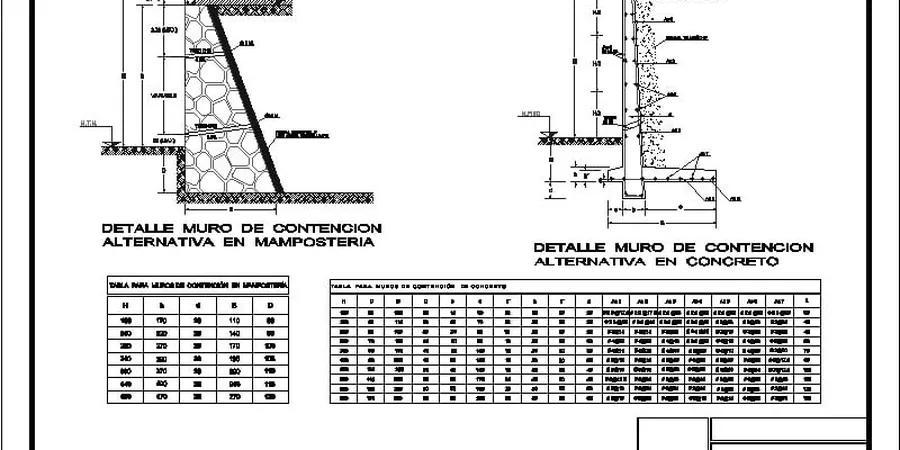
Reinforced concrete and masonry walls analysed for sliding, overturning, bearing and internal stability with seismic coefficients derived from site-specific hazard spectra rather than the default NZS 1170.5 values, which often underestimate short-period demand on Nelson’s stiff soil sites.
Anchored and soil-nailed walls
Permanent and temporary nail arrays designed with bond strength back-calculated from in-situ pull-out tests on the specific colluvial horizon. We use FLAC or Plaxis 2D for the global stability check when the wall supports a public road or a neighbouring dwelling.
Timber pole and crib wall assessment
Condition rating of existing timber retaining walls using the IPWEA guideline, combined with core sampling to estimate residual section. Where replacement is triggered, the new design is integrated with the original bench geometry to avoid re-triggering resource consent.
FAQ
What is the typical cost of retaining wall design for a standard residential section in Nelson?
Professional retaining wall design for a single-tier wall up to three metres high generally falls between NZ$1.500 and NZ$6.270, depending on whether the scope includes only the structural calculations or extends to full construction drawings, site-specific ground investigation, and council lodgement support. Walls exceeding three metres or requiring anchored solutions sit at the upper end of that range because of the additional analysis and detailing involved.
Do all retaining walls in Nelson require a building consent?
Under the New Zealand Building Act, walls retaining less than 1.5 metres of ground and not supporting a surcharge such as a driveway or building are usually exempt, but the Nelson City Council District Plan may impose additional rules if the wall is within a hazard overlay or a notable landscape area. Any wall over 1.5 metres, or stepped walls whose combined height exceeds that threshold, will almost certainly require consent and a Producer Statement from a chartered engineer.
How do you account for earthquake loads in a retaining wall?
Seismic design follows the Mononobe-Okabe pseudo-static method, with the horizontal seismic coefficient (kh) derived from the site subsoil class and the Nelson-specific hazard factor Z ≥ 0.30. For walls supporting critical infrastructure or located on liquefaction-prone alluvium near the Maitai River, we supplement the pseudo-static analysis with a displacement-based check using the Newmark sliding-block method to confirm that permanent deformation remains tolerable.
What is the biggest cause of retaining wall problems on Nelson’s hillside properties?
Poor drainage accounts for the vast majority of retaining wall issues observed across the region. When the backfill is not free-draining, or when the drainage outlet is buried during landscaping, water pressure builds up behind the wall and can double the design load. This is particularly common on the clay-rich colluvium between Washington Valley and The Brook, where surface water from upslope properties concentrates behind walls that were never designed for saturated conditions.
How long does the design process take from site visit to issued drawings?
A straightforward cantilever wall design on a site with existing geotechnical data can be turned around in ten to fifteen working days. If a drilling or test-pit investigation is required first, the programme extends by roughly three to four weeks to allow for fieldwork, laboratory testing of the foundation soils, and preparation of the ground investigation report that underpins the design assumptions.